Connect with Resources
The TFBC is able to connect you with resources for determining how to create an eco-friendly and energy efficient structure through this beautiful design style. The best way to get answers to your questions is to connect with a timber frame company. A company can respond to your needs with answers that relate specifically to this style of building. To connect, visit our Find a Professional page.
There are also many online resources that can introduce you to building standards for eco-friendliness and energy efficiency. Use these links to get started.
- Structural Insulated Panels (SIPs)
- SIPA
- LEED
- Energy Star
- U.S. Environmental Protection Agency
- California Air Resources Board
Use Timber Frame to Achieve Energy Efficiency
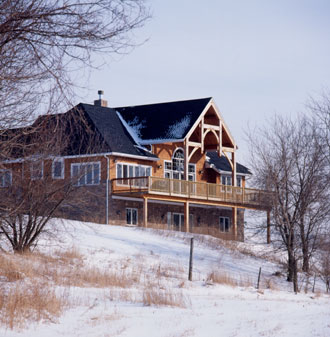 Timber framing has proven itself to be a sturdy and dependable way to build for thousands years. In this modern era, the timber frame style is now being held to a new standard: energy efficiency. Yet even under these new requirements, the timber frame style continues deliver outstanding performance. Building with timber inherently provides a strong insulation value, and new insulation techniques have allowed the timber framed structure to achieve soaring new levels of energy efficiency. This means that timber frame structures can qualify for energy rating programs and see reduced power bills for heating and cooling. This also means that a structure designed for beauty and strength can also contribute to the environment.
How It Works
In this construction, the load-bearing frame of a structure is built from structural timbers set inboard of the insulated wall. The timber frame is then typically enclosed with Structural Insulated Panels (SIPs) that are known for their exceptional ability to insulate and reduce air filtration. Other insulation methods are available for a timber framed structure, but the marriage of a timber frame with SIPs provides the tightest envelope. Once the frame is sealed with SIPs, the structure greatly reduces temperature transfer and air flow from the outside. The seal is so powerful that timber frame structures sealed with SIPs are also known to help reduce the effect of allergens and excess moisture.
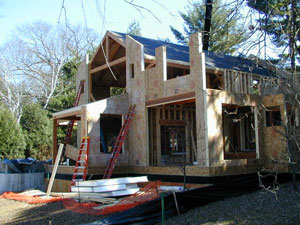 The methods for building a timber frame structure contrast with the conventional building methods of today, where many smaller pieces of dimensional lumber are joined together to construct a frame. These lumber studs then interrupt the insulation throughout the wall panel, creating thermal bridges that allow heat to escape.
Contact a timber frame organization for more information on the building materials they use and how they can help you achieve a green design.
Comparing Different Methods of Wood Framing
This section contains two diagrams that illustrate how a stick framed wall section fundamentally differs from a timber framed section that uses SIPs.
In figure 1 below, each dark brown line is a slender piece of dimensional lumber known as a stud. The insulation, shown in the light brown color, is then interrupted regularly by each stud, which decreases the overall insulation ability of a wall framed and insulated in this method.

Figure 1: Diagram of a light-frame wall section with a window
In contrast, figure 2 below shows a SIP wall panel with load-bearing heavy timber beyond. Thermal bridging is generally limited to 2x blocking around openings. The timber frame is doing what it does best -- carrying the load, and the SIPs are able to insulate with minimal interruptions.
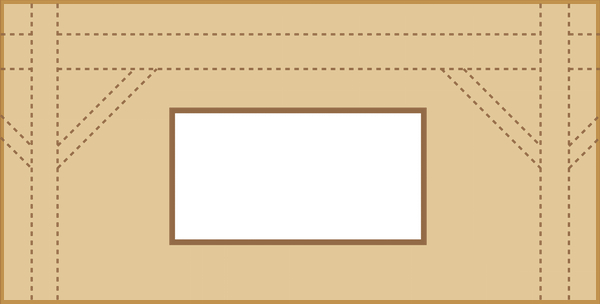
Figure 2: Diagram of a timber framed wall section that uses a window and SIPs
Connect with Resources
The TFBC is able to connect you with resources for determining how to create an eco-friendly and energy efficient structure through this beautiful design style. The best way to get answers to your questions is to connect with a timber frame company. A company can respond your needs with answers that relate specifically to this style of building. To connect, visit our Find a Professional page.
There are also many online resources that can introduce you to building standards for eco-friendliness and energy efficiency. Use these links to get started.
- TFBC SIPs page
- SIPA
- LEED
- Energy Star
- U.S. Environmental Protection Agency
- California Air Resources Board