

Digging Deeper

Timber frame craftsmen and historians can also participate in our parent organization, the Timber Framers Guild. The Guild is a not-for-profit educational association that builds community through cooperative public projects, provides information about timber framing to the general public as well as to timber framers, and educates and provides curriculum to beginners and experienced woodworkers alike. Established in 1985, the Guild has served the timber frame industry for 35 years providing conferences, regional meetings, projects, tours, other events, and training.
Post and Beam
Post and beam is a general term for building with heavy timbers. When used by TFBC, we are referring to timber framing as a specialized version of timber post and beam that is built like furniture, utilizing wood joinery such as mortise and tenon, held in place with wooden pegs.
As designs become more intricate and code requirements more stringent, the distinction between some of these common terms becomes blurred. For example, timber frames may require engineered connectors in some joints. These connectors can be hidden inside the joint instead of attached to the timber surface, preserving the traditional timber frame appearance while making use of non-traditional technologies. Also, hybrid structures are prevalent, where timber framing and stick building are both used in the construction of a building.
Timber Framing Comes From a Long Tradition
Building a timber frame structure means participating in a longstanding architectural tradition. Found in archeological sites in the Middle East, Europe, and Asia, the timber frame technique has a popular history throughout the world. The joints used to construct timber frame structures appeared as early as 200 B.C. Today, the timber framing tradition integrates modern building techniques and technology to enhance these beautiful and ancient designs.
“Timber framing is as old and as full of history as the story of architecture in wood itself.”
Building a Timber Frame Home, Tedd Benson with James Gruber
Living History
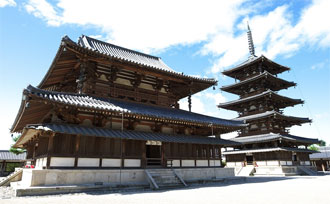 Timber framed buildings are built to last, which means that historic timber framed buildings of long gone centuries can still be seen and used today. One of the most famous examples of a longstanding timber frame in the USA is the Old North Church, located in Boston, Massachusetts. Built in 1723, the church entered into history in 1775 when two lanterns were hung as a signal to Paul Revere that the British were coming by sea instead of land. This historic moment sparked the American Revolution and was memorialized in Henry Wadsworth Longfellow’s famous poem “Paul Revere’s Ride.” The Old North Church is still used for church services today and is a United States National Historic Landmark. Its frame of timbers has held strong for three centuries.
Prior to timber framing in the United States, many other cultures worldwide capitalized on this building style. Stone temples in Greece once stood as a network of carefully arranged and simply joined timbers. In India, timber frame construction dates back to 200 B.C, where timbers were shaped from teak and connected with simple joinery and bamboo pegs. Japanese builders also discovered the strength and dependability of working with joints and fibrous timbers. In an area prone the typhoons and earthquakes, stone buildings would crack under stress, while the timbers shrugged and bore the weight. By the sixth century, Japan’s building culture was enriched by Buddhist immigrants from China, who helped raise magnificent wooden structures that still stand today.
A Look Back
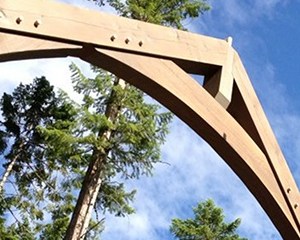 Modern timber framing has capitalized on technology, using industrial mill processing to speed up the production and reduce costs. But before the advent of the industrial mill, timber framing was a solely handcrafted process from the ground up. Diaries of early Americans in historic New England describe the culture surrounding timber framing as one of community-driven labor. Farmers in need of a new barn would spend the winter gathering wood, and in the spring time, prepare the wood for a master timber framer. Under the timber framer’s direction, the farmer and his neighbors would work the wood by hand and raise the structure together. In this way, barns and town halls were constructed relatively quickly with the help of fellow citizens.
The timber frame style was one of the major building models in the United States until the 1900s, when the industrial revolution met the demand for housing by producing smaller, dimensional lumber from its new mills. Instead of timber frame construction, this type of lumber led to “light frame” construction, or “stick building,” where a series of small pieces of lumber made up the structural frame. In the 1970s, Tedd Benson and group of dedicated builders revived the timber frame tradition and started building structures in historic fashion. Today, timber frame construction offers the strength and beauty of the timber frame tradition, with modern improvements in insulation, design, and more.
Commitment to Preserving History
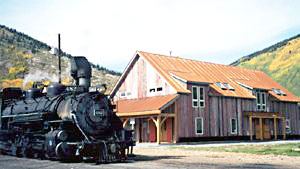 While there are many timber frame companies dedicated to developing new structures, there are also organizations committed to preserving historic ones.
The National Park Service’s National Landmark Program works to designate historically significant sites and preserve them for the future. Many of these are timber framed buildings, like the Old North Church. To learn more, visit the National Historic Landmark website.
The Timber Frame Guild has a special branch known as the Traditional Timberframe Research and Advisory Group that emphasizes documentation and preservation of historic timber framing. This group helps with repairs and construction of historic sites and annually holds conferences to encourage communication on reconstruction and how it is managed today. To learn more, visit the Traditional Timber Frame Research and Advisory Group page on the Timber Frame Guild website.